Meet the Quiet Guardians: Seven Maintainers Keeping Your Internet Alive
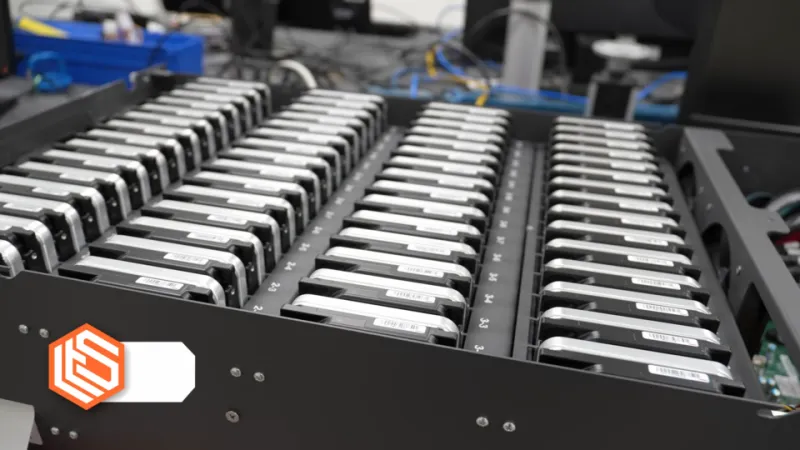
Photo: Lawrence Systems, CC BY 3.0, via Wikimedia Commons
The Internet Has a Staff of One
Here's a fun fact to ruin your dinner party: the curl library — the thing that moves data across the web billions of times a day — was maintained for years essentially by one guy in Sweden, Daniel Stenberg, reviewing every single commit himself. No army of engineers. No red phone line to a corporate security operations center. Just one person and a very full inbox.
We spend a lot of time on this site talking about tools, distros, and kernel patches. Today we want to talk about the humans behind them. Because the open-source internet isn't held up by some faceless institution — it's held up by a handful of maintainers who show up, unpaid or underpaid, year after year.
Consider this our hall of quiet heroes.
Daniel Stenberg — curl
curl is everywhere: in your car, your TV, your smart doorbell, every CI pipeline on Earth. Stenberg has worked on it since the late '90s, and for most of that time, the project ran on love and coffee. He's been refreshingly vocal about sponsorship — curl now pays for some dedicated development time thanks to corporate backers, but the lesson stands: critical infrastructure can rest on one person's shoulders.
Thorsten Glaser — the man behind MirBSD and tons of tooling
Some maintainers aren't famous even by open-source standards. People like Thorsten keep niche but essential tooling alive — the kind of code that gets pulled into other projects and forgotten until it breaks. These are the deep-bench heroes; when their code fails, entire build systems fail with it.
The OpenSSL Volunteers
Remember Heartbleed in 2014? The vulnerability that made every CTO in America wake up in a cold sweat? It existed because OpenSSL — software securing the majority of encrypted traffic worldwide — was maintained by a tiny team with a budget that would embarrass a lemonade stand. Post-Heartbleed funding improved things, but the core maintainers still carry workloads that would make a Big Tech staff engineer weep.
Todd Miller — sudo
Every time you type sudo on a Linux or BSD box, you're running Todd Miller's code. He took over maintainership back in the '90s and has patched it ever since — including during the 2021 Baronsamcan-style vulnerability disclosures (remember CVE-2021-3156?) that required rapid, global response. One person, keeping privilege escalation safe for millions of servers.
The Unsung Kernel Subsystem Maintainers
Linus Torvalds gets the headlines, but the Linux kernel depends on hundreds of subsystem maintainers — people like Greg Kroah-Hartman, who shepherds the stable branches that keep your servers patched. Greg has been openly candid about maintainer burnout, community friction, and the grind of reviewing thousands of patches. The kernel would simply stop without them.
The Debian and Fedora Release Teams
Every six months, volunteers coordinate thousands of packages, resolve dependency hell, and ship a release. When a Debian release slips, it's usually because a human being is doing the unglamorous work of chasing a hundred broken builds at 2 a.m. These are the stagehands of the distro world.
The Docs and Translation Heroes
Not every hero writes code. The people maintaining man pages, wikis, Arch's legendary documentation, and translations into dozens of languages are the reason you could actually install Linux on your laptop in the first place. Documentation maintainers are chronically under-credited and chronically under-funded.
The Burnout Problem Is Real
A 2022 study by the Linux Foundation and Laboratory for Innovation Science at Harvard found that a huge share of critical open-source work is done by just a handful of unpaid or lightly paid individuals. Add to that the XZ Utils backdoor attempt in 2024 — where an attacker tried to socially-engineer his way into a maintainer role — and you get a picture: these people are overworked, underappreciated, and increasingly targeted.
Maintainer burnout isn't a hypothetical. Projects go unmaintained. Security patches lag. And when a lone maintainer quits, the software everyone depends on quietly rots.
How You Can Be a Hero Too
You don't need to write C to help:
- Donate. Even $5/month to curl, OpenSSL, or your favorite distro adds up. GitHub Sponsors and Open Collective make it painless.
- Say thank you. A kind bug report — with reproduction steps! — is worth more than you know.
- Contribute non-code. Triage issues, improve docs, answer forum questions.
- Advocate at work. If your company relies on open source, push for corporate sponsorship. It's cheaper than a breach.
The internet runs on the generosity of strangers. The least we can do is make sure those strangers don't burn out. Be someone's hero today — it starts with a pull request, a donation, or even just a 'thanks.'